U:FF – what a hot day at the Unperfekthaus in Essen!
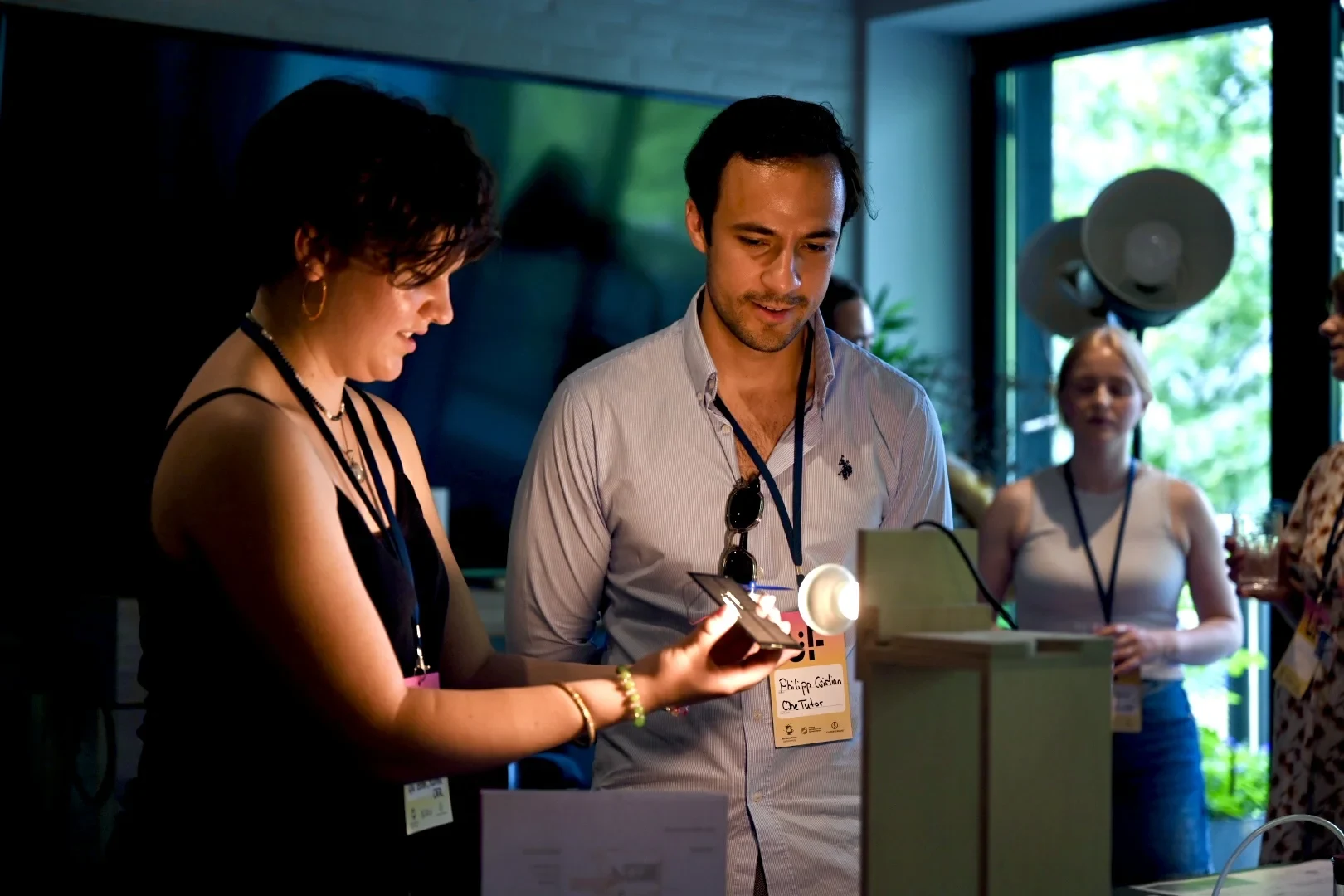
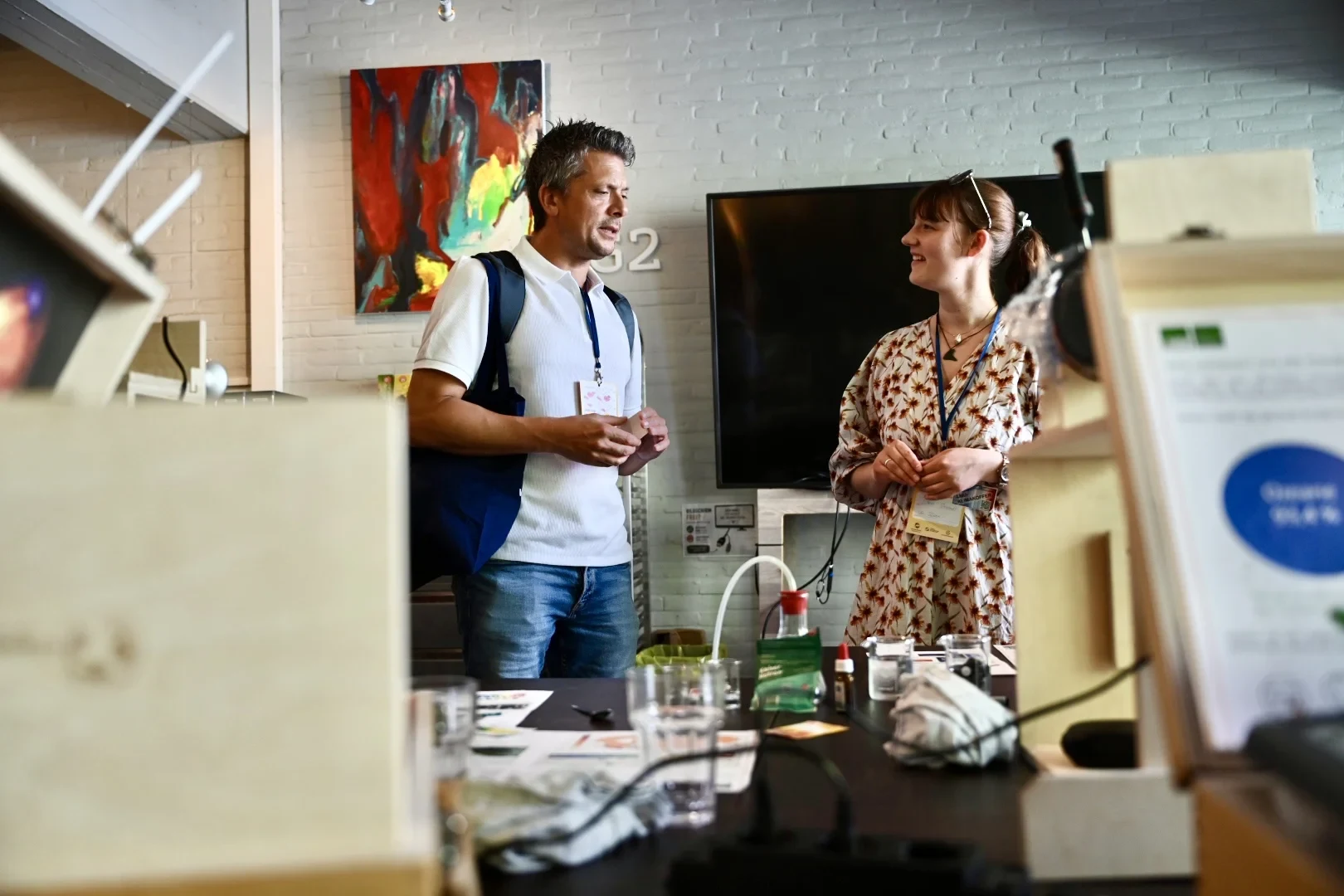
On Monday, June 22nd 2026, we (Ellen Arimond, Greta Vehring and Lucia Gröger) from KlimaOER had the opportunity to present our LMU climate kit at the University Future Festival (U:FF). Our aim was actually to get the participants’ minds buzzing with clear explanations about global warming, but the weather took care of the practical demonstration for us straight away.
With temperatures in the exhibition hall exceeding 30 °C, the relevance of our work became immediately apparent. The extreme heat put us and our materials through a real test: physical and chemical experiments often behave somewhat more unpredictably at tropical room temperatures. In hindsight, however, our somewhat ‘imperfect’ measurement results actually fitted in perfectly with the creative concept of the Unperfekthaus ("unperfecthouse").
The climate kit contains physics and chemistry experiments that illustrate the individual phenomena of climate change, make them tangible and thus aid understanding. Take ocean acidification, for example: to demonstrate this in an experiment, bicarbonate of soda and citric acid are mixed. This causes a reaction, producing the greenhouse gas carbon dioxide. This is then fed into a beaker containing water and an indicator solution. The water changes colour because it binds the carbon dioxide, causing the pH value to drop – in other words, the water becomes acidic. Applied to our Earth system, this means that more carbon dioxide in the air leads to increased absorption of it by the ocean. But what is the problem with acidic waters? In short, more carbonate ions are bound in the reaction sequence. These are needed by calcium-forming organisms, such as freshwater snails (with shells), mussels and corals.
The stifling heat in which we carried out these experiments was no coincidence, but a direct consequence of global warming. Extreme events that were once considered rare ‘once-in-a-century heatwaves’ are recurring with ever-increasing frequency. As the temperature difference between the rapidly warming Arctic and the equator shrinks, the jet stream (our high-altitude wind) is stalling. As a result, high-pressure systems linger over a region for days or weeks on end. The air masses continue to heat up unchecked, resulting in a heatwave.
The festival has shown us all that climate education must not be neglected. It affects us all. We try to convey this both through hands-on experiences and direct dialogue – even if it means breaking a sweat in temperatures of over 30 °C – as well as through our learning module on wind.
A very heartfelt thank you goes to ORCA.nrw (the state portal for study and teaching) for the invitation and for organising this wonderful event in Essen. A big thank you also goes to our colleagues at OE_Com from the digiLL university consortium, who played a key role behind the scenes in making this event happen.