Working group Climate Monitoring
The research activities of the working group "Climate monitoring" focus on the dynamics of the atmospheric boundary layer. For the analysis of the boundary layer, i.e. the layer that is in direct contact with the Earth's surface, we use modern in-situ observation techniques. With these, we study exchange processes between air and water (ocean, lakes, and rivers) and between air and land, e.g., the exchange of momentum, heat, moisture, and gases. In close collaboration with the working group "climate dynamics and statistics", we pursue an integrated view of the Earth system, bringing together observations, dynamical and stochastic process understanding, and numerical modeling to understand processes in the energy, water, and carbon cycles.
Research focus
- Boundary layer meteorology
- Climate dynamics
- Carbon cycle
- Atmosphere-Water Exchange Processes
- Plant-Soil-Atmosphere Exchange Processes
- In-situ observations
Teaching focus
- Climate dynamics
- Atmospheric boundary layer
- Physical climatology
- Presentation techniques
Seminar
Projects

Family-Friendly Conferences
This project is dedicated to more inclusive conference participation for scientists with family obligations.

KlimaOER
Development, expansion and strengthening of the OER community in meteorology to include as many specialist areas as possible relating to the climate system in order to create an barrier-free and level-adapted OER landscape.

Children in the Climate Crisis
This project sees itself as an international contribution to the fight against climate change. The focus is on professionalizing ecological and scientific education for educators at daycare centers, schools, and youth centers. Through sensitizing children and adolescents to the need for climate protection, the necessary, sustainable societal consensus is to be promoted.
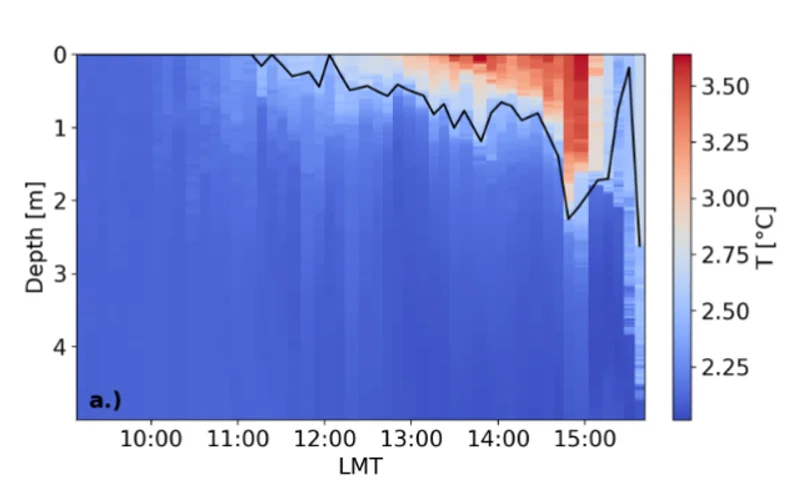
Diurnal Warming at the Ocean Surface
During the day, when adequate solar heating is available, the temperature of the ocean can increase significantly close to the surface. This is known as diurnal warming. However, solar heating is not enough on its own. Diurnal warming also requires sufficiently low wind speeds to prevent the mixing of deeper, colder waters. Diurnal warming can be important for the exchange of heat and carbon between the ocean and the atmosphere, which is a major contributor to climate regulation.
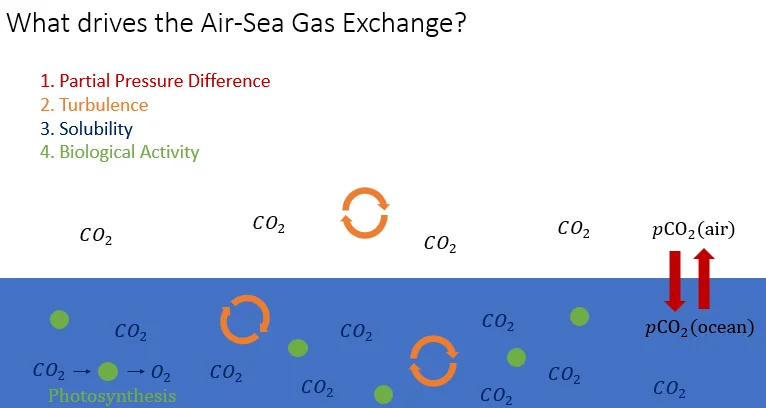
Relationship between the Air-Sea Gas Transfer Velocity and Turbulence
The gas transfer velocity k is frequently used to describe the exchange of gases between the atmosphere and the ocean. Typically, empirical parameterizations as a function of wind speed are applied to derive k. However, there are also other drivers of air-sea gas exchange. We investigate the interplay of these processes based on eddy covariance (EC) and microstructure profiler data.
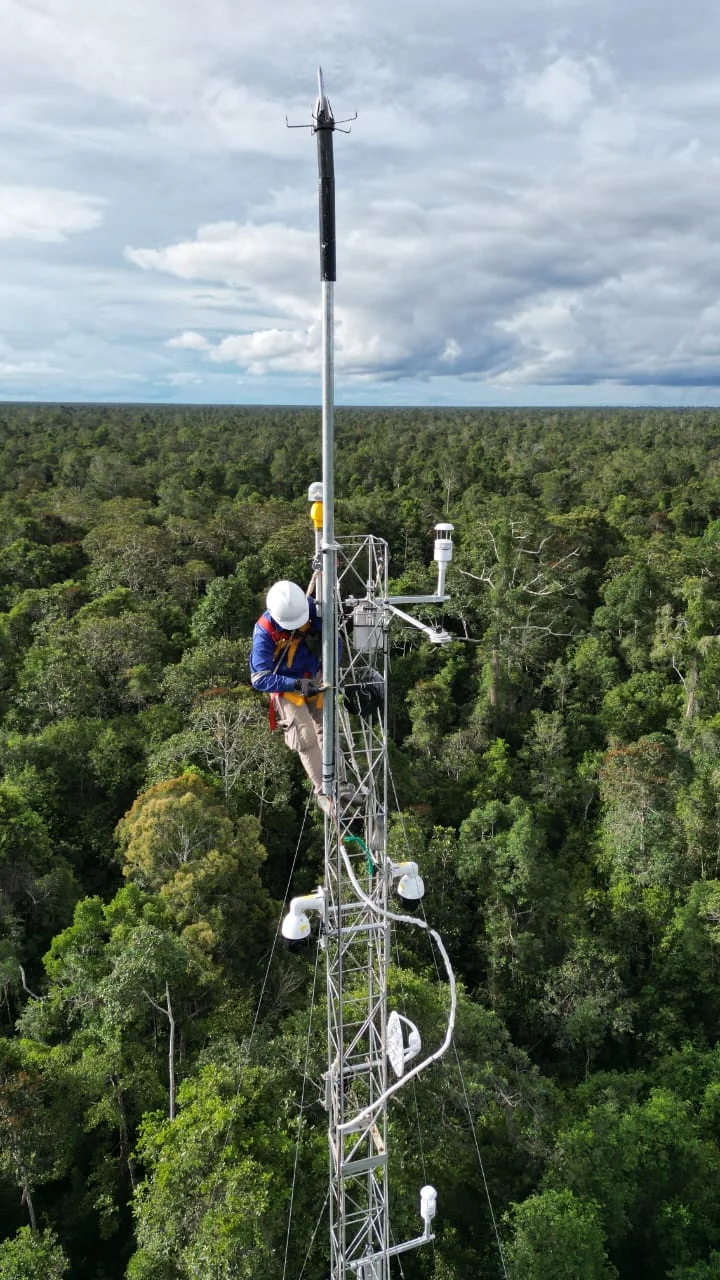
Unraveling the Tropical Peatland Carbon Cycle
Exploring carbon cycle spatiotemporal variability from multi-method approach.
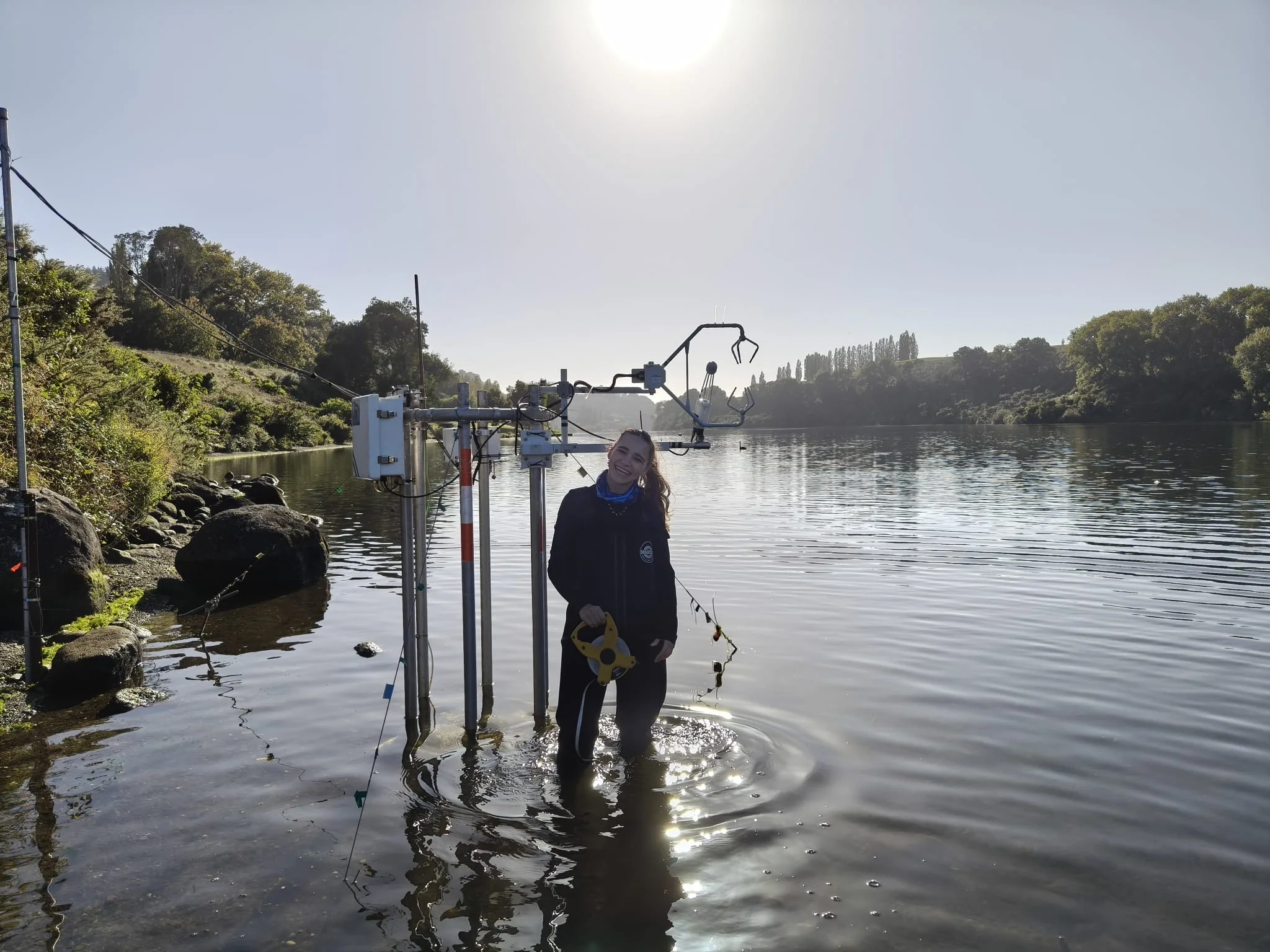
Around the World: My research in New Zealand
For a month, my research took me to the other side of the world: to Hamilton, New Zealand. Here, where it is now autumn instead of spring, I worked together with researchers from Julia Mullarney’s research group to carry out measurements on the Waikato River.
At the beginning of March, the journey started with a long flight across the Atlantic and then the Pacific Ocean. After arriving in New Zealand, I immediately joined the PhD students and technicians of the Coastal Marine Group in the laboratory to assemble and test the measurement instruments.
Staff

Jun.-Prof. Dr. Leonie Esters
Meteorology - Junior Professor

Yohanes Ginting
Meteorology - PhD Student

Simon Hauser
Meteorology - PhD Student

Dr. Yann Büchau
Meteorology - Research Associate

Elena Päffgen
Meteorology - Research Associate

Ellen Arimond
Meteorology - Research Associate