Research

Diurnal Warming at the Ocean Surface
During the day, when adequate solar heating is available, the temperature of the ocean can increase significantly close to the surface. This is known as diurnal warming. However, solar heating is not enough on its own. Diurnal warming also requires sufficiently low wind speeds to prevent the mixing of deeper, colder waters. Diurnal warming can be important for the exchange of heat and carbon between the ocean and the atmosphere, which is a major contributor to climate regulation.

Relationship between the Air-Sea Gas Transfer Velocity and Turbulence
The gas exchange rate k is frequently used to describe the exchange of gases between the atmosphere and the ocean. Typically, empirical parameterisations are used to express k as a function of wind speed. However, there are also other factors that influence gas exchange. We investigate the interaction of these processes based on data from eddy covariance (EC) measurements and measurements taken with a microstructure profiler.
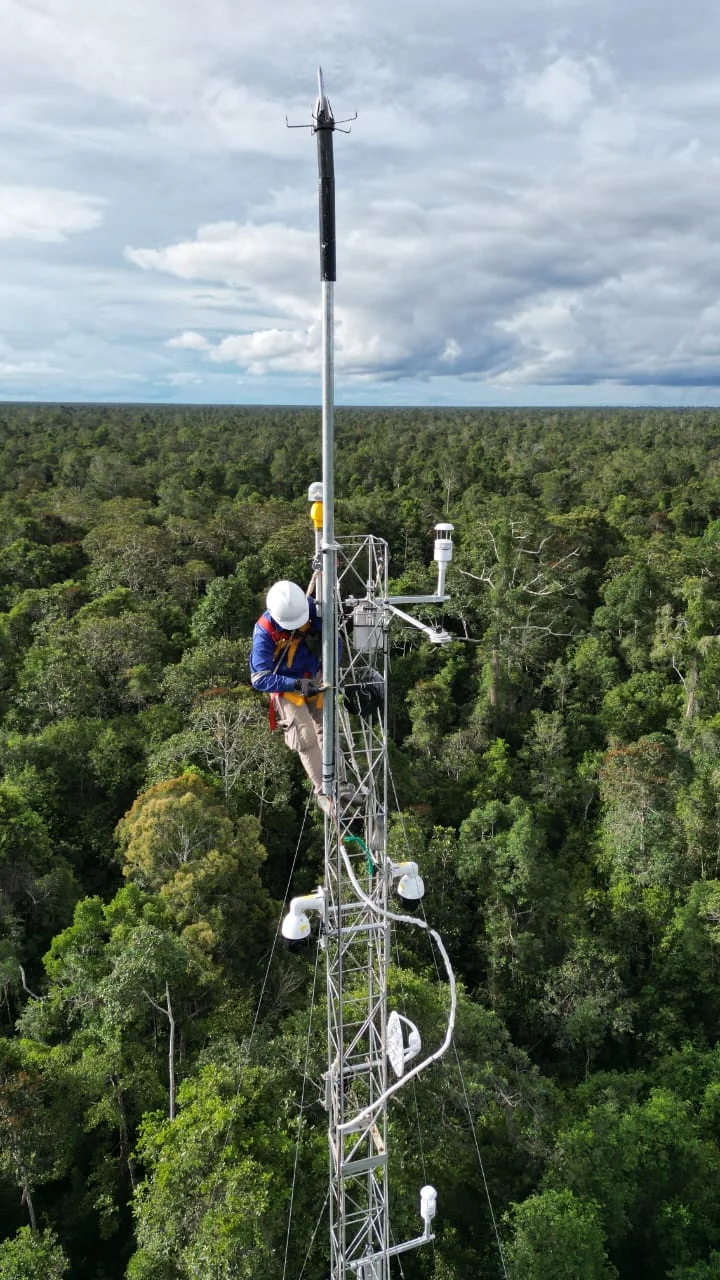
Unraveling the Tropical Peatland Carbon Cycle
In this project, we are investigating the spatial and temporal variability of the carbon cycle in tropical peatland ecosystems using a multi-method research approach. The aim is to gain a better understanding of the processes and controlling mechanisms governing carbon exchange between vegetation, soils and the atmosphere, and to quantify their response to natural and anthropogenic influences. The project focuses on peatland areas in Borneo.
Contact

Jun.-Prof. Dr. Leonie Esters
Meteorology - Junior Professor
1.010
Auf dem Hügel 20
53121 Bonn